


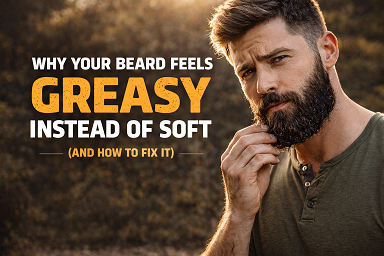
A greasy beard isn’t a sign of good conditioning—it’s a sign that something in your routine isn’t working.
If your beard looks shiny, feels heavy, or gets oily just hours after applying product, the problem usually isn’t too little care. It’s the wrong type of care or the wrong technique.
This article explains why beards feel greasy instead of soft and exactly how to fix it—without buying more products or overcomplicating your routine.
Greasy vs Soft: What’s the Difference?
A soft beard:
- Feels light and flexible
- Moves naturally
- Doesn’t feel coated hours later
- Looks healthy, not shiny
A greasy beard:
- Feels heavy or sticky
- Looks oily under light
- Smells stronger over time
- Collects dust and lint
Grease sits on top of the beard. Softness comes from inside the hair and skin.
The #1 Reason Your Beard Feels Greasy: Too Much Product
More oil does not equal more moisture.
What Happens When You Overapply
- Excess oil sits on the hair shaft
- Skin can’t absorb it all
- Hair becomes weighed down
- Beard attracts dirt and debris
The Fix
- Short beard: 2–3 drops
- Medium beard: 3–5 drops
- Long beard: 5–7 drops
If your hands are slick after application, you used too much.
Mistake #2: Applying Beard Oil to a Dry Beard
Oil and water work together. Oil alone doesn’t hydrate—it seals.
Applying oil to a completely dry beard:
- Traps dryness underneath
- Causes oil to sit on the surface
- Creates a greasy feel faster
The Fix
- Apply beard oil to a slightly damp beard
- Best time: right after rinsing or showering
This allows the oil to lock in moisture instead of floating on top.
Mistake #3: Using Heavy or Poorly Balanced Oils
Not all beard oils absorb the same way.
Heavy Oils That Cause Grease
- Thick, slow-absorbing oils
- Overly waxy blends
- Poorly balanced formulas
These oils coat the hair instead of nourishing it.
What Works Better
- Lightweight, fast-absorbing base oils
- Oils that support skin first, beard second
- Balanced blends instead of single heavy oils
The goal is absorption, not shine.
Mistake #4: Skipping the Skin Under Your Beard
Your skin controls oil production.
When skin is:
- Over-dried → it produces more oil
- Irritated → it becomes unbalanced
This creates a cycle where your beard feels greasy no matter what you apply.
The Fix
- Gentle cleansing (not stripping)
- Daily beard oil massaged into the skin
- Avoid harsh soaps and hot water
Balanced skin = balanced beard.
Mistake #5: Layering Too Many Products
Oil + balm + butter + styling products = buildup.
Signs of Product Buildup
- Beard feels coated
- Oil smell gets stronger over time
- Hair clumps instead of separating
The Fix
- Use beard oil daily
- Use balm or butter only when needed
- Don’t layer products automatically—layer intentionally
More steps don’t equal better results.
How to Make Your Beard Soft Instead of Greasy
The Correct Daily Routine
- Rinse beard with lukewarm water
- Pat dry (leave slightly damp)
- Apply the correct amount of beard oil
- Massage into skin first
- Comb or brush gently
That’s it.
No heaviness. No shine. Just softness.
How Long Until the Greasy Feeling Goes Away?
If you fix the mistakes above:
- 1–2 days: Beard feels lighter
- 3–5 days: Oil absorption improves
- 1–2 weeks: Beard becomes consistently soft
Your beard adapts quickly when you stop overwhelming it.
Final Thoughts
A greasy beard isn’t a sign that you need more product—it’s a sign that you need better technique and balance.
When you:
- Use the right amount
- Apply oil correctly
- Focus on skin health
- Avoid overloading products
Your beard stops feeling greasy and starts feeling the way it should—soft, clean, and effortless.
Healthy beards don’t shine.
They feel right.