

Controlled warmth with woody spice character.
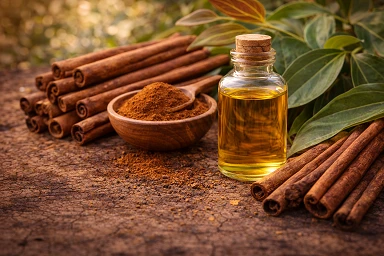
Cinnamon has been prized for thousands of years, but long before cinnamon bark became globally famous, cinnamon leaves were widely used for their aromatic and practical properties. Native to Sri Lanka and parts of Southeast Asia, cinnamon trees played an important role in ancient trade, traditional remedies, and daily life.
In early Sri Lankan, Indian, and Middle Eastern cultures, cinnamon leaves were burned, infused, or distilled to create warming preparations used for cleansing, preservation, and personal care. While cinnamon bark was often reserved for trade and royalty, cinnamon leaf oil became a more accessible and versatile option for everyday use.
As global trade expanded during the medieval spice trade era, cinnamon leaf oil gained recognition in Europe for its warm, spicy, and slightly woody aroma, making it a valued ingredient in early perfumery, apothecaries, and grooming products. Today, cinnamon leaf oil is respected for its depth and warmth—distinct from the sharper sweetness of cinnamon bark oil.
Cinnamon trees are grown in tropical climates with rich soil and consistent rainfall. The same tree produces both cinnamon bark and leaves, each yielding different aromatic profiles.
Mature leaves are harvested during pruning cycles. Using leaves allows for a more sustainable process, as it does not require stripping bark from the tree.
The harvested leaves are dried to reduce moisture and concentrate aromatic compounds, then lightly crushed to improve oil release during distillation.
The prepared leaves are steam-distilled. As steam passes through the plant material, it captures the volatile aromatic compounds.
The steam cools and condenses back into liquid, allowing the essential oil to naturally separate from the water.
The oil is filtered and evaluated for aroma, purity, and consistency before being approved for cosmetic use.
Cinnamon leaf oil contains high levels of eugenol, giving it a warm, spicy, slightly clove-like character that is smoother and less sweet than cinnamon bark oil.
In beard care, cinnamon leaf oil adds warmth, richness, and subtle spice. It enhances wood-based blends while providing balance to citrus and resin notes. Used carefully, it delivers a confident, rugged character without overwhelming the scent profile.
Rooted in ancient spice traditions and refined through modern distillation, cinnamon leaf oil brings timeless warmth—bold, controlled, and unmistakably masculine.
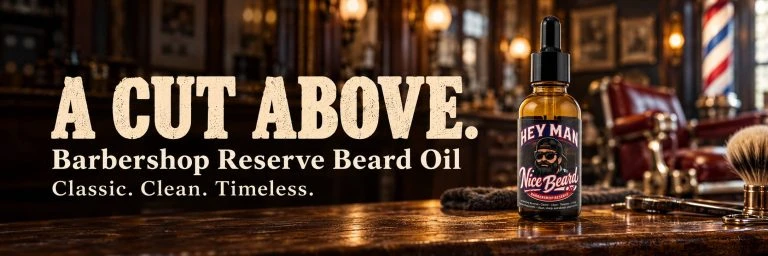
Hey Man Nice Beard® scents come from essential oils, never synthetic fragrance. Every blend is made in small batches, blended in-house, and tested by us. No animal testing.
Free shipping on U.S. orders $40+. $6.99 flat rate under $40. U.S. only.