
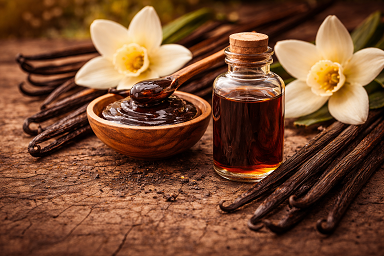
Vanilla has one of the richest and most storied histories of any aromatic ingredient. It originates in Mesoamerica, where the Totonac people of present-day Mexico were the first to cultivate vanilla orchids over a thousand years ago. Vanilla was highly prized and later adopted by the Aztecs, who used it to flavor ceremonial cacao drinks reserved for nobility and warriors.
When Spanish explorers introduced vanilla to Europe in the 16th century, it quickly became a symbol of luxury and refinement. For centuries, vanilla remained rare and expensive due to its labor-intensive cultivation and curing process.
As perfumery and botanical extraction evolved, vanilla oleoresin emerged as a preferred form for fragrance and grooming. Unlike synthetic vanilla or alcohol-based extracts, oleoresin captures the full-bodied, deep, and true character of cured vanilla beans, preserving both aroma and richness. Today, vanilla oleoresin is considered a premium ingredient in fine fragrance and grooming formulations.
1. Vanilla Cultivation
Vanilla comes from the fruit of the vanilla orchid, a climbing plant that requires warm climates and careful hand pollination. Each flower blooms for only a single day and must be pollinated manually.
2. Harvesting the Beans
Once mature, green vanilla pods are harvested by hand. At this stage, they contain little aroma and must undergo curing.
3. Curing & Fermentation
The pods are cured through a multi-week process involving sweating, drying, and conditioning. This critical stage develops vanilla’s signature aroma and complex flavor compounds.
4. Oleoresin Extraction
The cured beans are finely ground and extracted using food- or cosmetic-grade solvents to pull both aromatic compounds and natural resins from the plant material.
5. Solvent Removal & Concentration
The solvent is carefully removed, leaving behind a thick, dark, highly aromatic oleoresin that represents the full essence of vanilla beans.
6. Quality Control
The final oleoresin is evaluated for aroma depth, consistency, and purity before use in grooming formulations.
Vanilla oleoresin is far richer and more complex than essential oils or synthetic vanilla fragrances.
Key characteristics
In beard care, vanilla oleoresin acts as a base note and natural fixative. It adds warmth, smoothness, and depth to scent blends while helping fragrances last longer on the beard. When paired with woods, spices, or citrus, vanilla oleoresin creates a refined, approachable masculinity—never sugary, always grounded.
From ancient cacao rituals to modern grooming craftsmanship, vanilla oleoresin delivers timeless richness—bold, smooth, and unmistakably premium.