
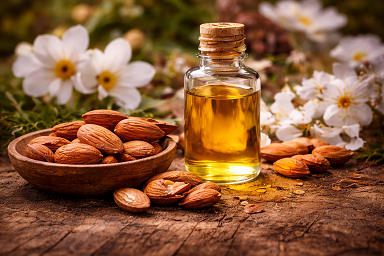
Sweet almond oil has a long and respected history that stretches back thousands of years. Originating in the Middle East and South Asia, almonds were among the earliest cultivated tree nuts, valued not only as food but also for their nourishing oil.
Ancient Egyptian, Greek, and Roman cultures used sweet almond oil in skin care, massage, and hair treatments, praising its ability to soften skin, improve complexion, and protect against dryness. It was commonly infused with herbs and botanicals and used by both men and women for grooming and medicinal purposes.
As trade routes expanded across Europe and Asia, sweet almond oil became a staple in traditional apothecaries. Its gentle nature made it especially popular for sensitive skin—earning a reputation as a daily-use oil that delivered consistent results without irritation. That reputation continues today in modern skincare and beard grooming.
1. Almond Cultivation
Sweet almonds are grown on deciduous trees that thrive in warm climates with well-drained soil. Only sweet almonds are used for cosmetic oils—bitter almonds are excluded entirely.
2. Harvesting & Shelling
Once ripe, almonds are harvested, dried, and shelled to separate the edible nut from the outer husk and hard shell.
3. Cold Pressing
The shelled almonds are mechanically cold-pressed to extract the oil. This low-heat method preserves the oil’s vitamins, fatty acids, and natural softness.
4. Filtration
After pressing, the oil is gently filtered to remove fine particles, resulting in a clear, pale-golden oil with a smooth texture and neutral aroma.
5. Quality Assurance
High-quality sweet almond oil remains unrefined, free from chemical solvents, and stable enough for long-term use in grooming formulations.
Sweet almond oil is rich in oleic and linoleic fatty acids, along with vitamins A, D, and E. This combination makes it exceptionally good at conditioning both skin and hair without weighing them down.
Key benefits
In beard care, sweet almond oil plays a critical supporting role. It smooths and conditions beard hair while delivering nutrients to the skin beneath—helping reduce breakage, dryness, and rough texture. Its light feel balances heavier oils, ensuring the beard stays soft, healthy, and touchable.
From ancient grooming traditions to modern beard formulations, sweet almond oil remains a trusted ingredient—simple, effective, and proven over time.