
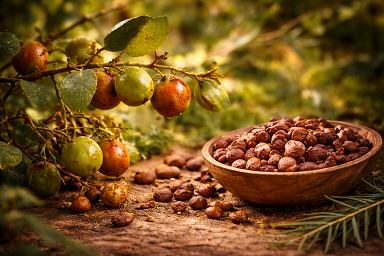
Jojoba oil has been used for centuries, long before it became a staple in modern grooming products. Indigenous peoples of the southwestern United States and northern Mexico—particularly in desert regions—crushed jojoba seeds to produce a golden liquid used to heal skin, condition hair, and protect against harsh sun and wind.
What made jojoba unique even then was its performance in extreme environments. In arid climates where moisture was scarce, jojoba oil helped prevent dryness, cracking, and irritation. This desert-born resilience is why jojoba remains one of the most effective natural oils for skin and hair care today.
In the 1970s, jojoba oil gained global attention when researchers discovered it closely resembles human sebum, the natural oil produced by our skin. As a result, jojoba quickly replaced harsher synthetic ingredients and even sperm whale oil in cosmetics—earning its place as a premium, sustainable grooming ingredient.
1. Cultivation
Jojoba plants thrive in dry, desert-like conditions with minimal water. The shrubs produce seeds rich in wax esters, making them naturally sustainable and environmentally friendly crops.
2. Harvesting
Once mature, jojoba seeds are harvested and cleaned to remove debris and impurities. High-quality oil begins with properly dried, fully ripened seeds.
3. Cold Pressing
The seeds are mechanically cold-pressed to extract the oil. This method avoids heat and chemicals, preserving the oil’s natural nutrients, antioxidants, and stability.
4. Filtration
After pressing, the oil is gently filtered to remove fine seed particles. No refining, bleaching, or deodorizing is required for premium jojoba oil.
5. Quality Control
The final product is a clear, golden oil with a long shelf life and excellent stability—ideal for grooming formulations.
Technically, jojoba oil isn’t an oil at all—it’s a liquid wax ester. This structure is nearly identical to human sebum, which allows it to absorb easily without clogging pores or leaving a greasy residue.
Key advantages
In beard care, jojoba oil is unmatched. It conditions beard hair while feeding the skin underneath—reducing itch, flaking, and irritation. Because it works with your skin instead of against it, jojoba oil forms the backbone of a truly effective beard oil blend.
From ancient desert use to modern grooming science, jojoba oil remains one of the most reliable and respected ingredients in men’s care—for good reason.