
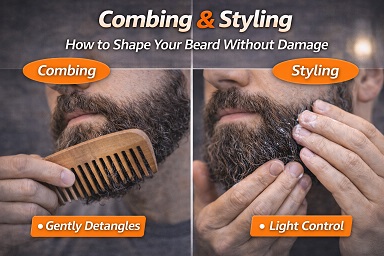
Combing and styling are often misunderstood. Many men treat them as finishing touches, when in reality they’re maintenance tools. Done correctly, combing and styling improve beard health, reduce breakage, and help your beard look intentional — not forced.
This page explains when to comb, how to style, and how to keep control without damaging your beard or overloading it with product.
Combing isn’t about appearance alone. Daily, gentle grooming:
Skipping combing allows tangles to form. Overdoing it causes damage. The balance is simple and effective.
Best for:
Daily use • Medium to long beards • Detangling
Best for:
Detail work • Short beards • Mustache grooming
Best for:
Short beards • Surface smoothing
For most beards, a wide-tooth comb is the safest and most versatile tool.
The best time to comb is after beard oil or butter has been applied.
Avoid combing a completely dry beard — this causes unnecessary stress and breakage.
Forcing the comb through tangles leads to snapping and thinning over time.
Styling should be subtle and functional, not stiff or heavy.
Layering too much product causes buildup and dullness.
Beards respond to repetition. When you:
Your beard begins to naturally fall into place.
Training takes weeks, not days — but the results last.
Beards look better when they’re guided, not forced.
Adjust styling to conditions instead of fighting them.
At night:
Night grooming supports recovery, not control.
Combing and styling aren’t about controlling your beard — they’re about working with it.
When you choose the right tools, use gentle technique, and style with restraint, your beard becomes easier to manage, healthier to maintain, and better looking over time.
A well-groomed beard doesn’t look forced.
It looks natural — because it is.