Back to Top

Category: Beard Problems

Beard Dandruff vs Dry Skin: How to Tell the Difference and Treat It

White flakes in your beard are one of the most frustrating beard problems men face. The mistake most people make is assuming all flakes are the same. They aren’t.

Beard dandruff and dry skin look similar, but they have different causes—and different solutions. Treating the wrong condition often makes the problem worse.

This guide explains how to tell the difference and how to fix each one correctly.


Why Beards Flake in the First Place

Facial skin is thinner and more sensitive than scalp skin. Once you grow a beard, that skin:

  • Loses moisture faster
  • Produces oil unevenly
  • Gets less oxygen and exfoliation

Flakes appear when the skin barrier becomes compromised. The reason it breaks down determines whether you’re dealing with dry skin or beard dandruff.


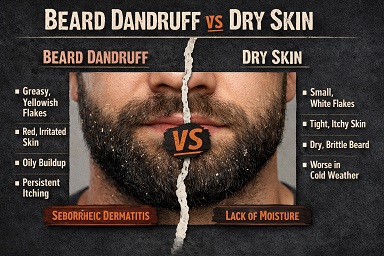
Beard Dandruff vs Dry Skin: The Key Differences

Dry Skin (Most Common)

Cause: Lack of moisture and damaged skin barrier

Signs:

  • Small, light flakes
  • Tight or itchy feeling
  • Flaking worsens in cold or dry weather
  • Beard hair feels rough or brittle

Dry skin is a hydration issue—not a hygiene issue.


Beard Dandruff (Seborrheic Dermatitis)

Cause: Overgrowth of yeast combined with excess oil

Signs:

  • Larger, yellow or greasy flakes
  • Red or irritated skin underneath
  • Waxy buildup near the skin
  • Flakes persist even with moisturizing

This is a skin condition, not simply dryness.


How to Tell Which One You Have

Use this quick test:

  • If flakes improve within 3–5 days of daily beard oil use, it’s dry skin
  • If flakes remain greasy, clump together, or cause redness, it’s beard dandruff

Most men experience dry skin, not true dandruff.


How to Treat Dry Beard Skin

Step 1: Stop Overwashing

  • Wash beard 2–3 times per week max
  • Rinse with water on off days

Overwashing strips natural oils and worsens dryness.

Step 2: Use Beard Oil Daily

Beard oil restores moisture to:

  • The skin beneath the beard
  • The hair shaft itself

Apply to a slightly damp beard and massage into the skin first.

Step 3: Avoid Harsh Ingredients

Skip products containing:

  • Alcohol
  • Strong detergents
  • Overpowering fragrance

These damage the skin barrier and increase flaking.


How to Treat Beard Dandruff

Step 1: Use a Gentle Medicated Cleanser

Wash 2–3 times per week with a mild antifungal or zinc-based cleanser designed for facial skin.

Avoid harsh dandruff shampoos—they often cause rebound irritation.

Step 2: Rebalance With Beard Oil

Even dandruff-prone skin needs hydration. Lightweight oils help normalize oil production and reduce irritation.

Step 3: Stay Consistent

Beard dandruff improves gradually. Expect visible reduction within 1–2 weeks of consistent care.


Common Mistakes That Make Flaking Worse

  • Scrubbing aggressively
  • Washing daily with shampoo
  • Using scalp products on facial skin
  • Applying oil only to the hair, not the skin
  • Switching products too frequently

Consistency matters more than intensity.


Preventing Beard Flakes Long-Term

  • Maintain a skin-first routine
  • Use beard oil daily
  • Groom after applying product, not before
  • Adjust routine seasonally (winter dryness is real)
  • Keep routines simple and repeatable

Flakes return when routines break down.


Final Thoughts

Most beard flaking is caused by dry skin, not dandruff. Treating it correctly requires hydration, restraint, and consistency—not stronger products.

Healthy skin creates a comfortable beard.
Comfort creates consistency.
Consistency solves the problem.

That’s the difference between managing flakes and eliminating them.
How to Build a Daily Beard Care Routine That Prevents Itch, Dryness, and Breakage

A beard shouldn’t itch, feel brittle, or look unruly. When it does, the problem is rarely genetics—it’s almost always an inconsistent or incorrect daily routine. The good news is that preventing beard itch, dryness, and breakage doesn’t require a complicated regimen or a shelf full of products. It requires the right steps, in the right order, done consistently.

This guide walks you through a practical, no‑nonsense daily beard care routine designed to keep your beard soft, healthy, and resilient.


Why Daily Beard Care Matters More Than Length

Beard hair is different from the hair on your head. It’s:

  • Coarser
  • More prone to dehydration
  • Constantly exposed to friction from clothing, hands, and weather

Skipping daily care leads to:

  • Dry skin under the beard (the main cause of itch)
  • Brittle hairs that snap instead of bend
  • Uneven texture and dull appearance

A daily routine doesn’t mean aggressive washing or over‑oiling. It means maintaining balance—clean, hydrated skin and conditioned hair.


The Foundation: Clean Skin First, Always

Step 1: Cleanse the Beard (Once Per Day or Every Other Day)

A dirty beard traps oil, sweat, and dead skin, which leads to itch and flaking. But overwashing strips natural oils and causes dryness.

Best practice:

  • Use a beard-specific wash, not regular shampoo
  • Wash once daily if active, or every other day if sedentary
  • Massage down to the skin, not just the hair

Avoid: Harsh sulfates, heavy fragrances, or “2-in-1” products

Clean skin is the base of every healthy beard routine.


Hydration Is Non-Negotiable

Step 2: Apply Beard Oil to Damp Hair

Beard oil is for the skin first, beard second. Applying it correctly prevents itch and dryness before they start.

How to apply properly:

  1. Pat beard dry after washing (leave it slightly damp)
  2. Use 3–6 drops depending on length
  3. Rub between palms
  4. Massage into the skin under the beard
  5. Pull remaining oil through the hair

Applying oil to damp hair helps lock in moisture and distribute product evenly.


Conditioning Prevents Breakage

Step 3: Use Beard Butter or Balm (Optional but Powerful)

If your beard feels stiff, wiry, or breaks easily, oil alone may not be enough.

  • Beard butter: Lightweight, ideal for daily softness
  • Beard balm: Adds light hold and protection from wind and cold

Apply after oil, focusing on the mid-lengths and ends where breakage occurs most.


Daily Detangling = Less Hair Loss

Step 4: Comb or Brush With Intention

Brushing isn’t about style—it’s about distribution and protection.

Use the right tool:

  • Short beards: Fine-tooth comb
  • Medium to long beards: Wide-tooth comb or boar bristle brush

Benefits:

  • Evenly spreads oil and butter
  • Prevents knots that cause breakage
  • Trains hair to grow in a uniform direction

Always detangle gently. Pulling through knots causes unnecessary hair loss.


Don’t Ignore Environmental Stress

Step 5: Protect Your Beard Throughout the Day

Daily damage often comes from habits, not products.

Watch out for:

  • Excessive touching or pulling
  • Rubbing against rough collars
  • Cold air and dry indoor heat

A small amount of balm in the morning creates a barrier that reduces moisture loss and friction damage.


Night Care Is the Secret Weapon

Step 6: Light Nighttime Hydration

Your beard loses moisture overnight, especially in dry environments.

Simple night routine:

  • Rinse with water if needed
  • Apply 1–2 drops of beard oil or a light butter
  • Comb gently before bed

If your beard constantly feels dry in the morning, this step alone can make a noticeable difference.


Weekly Maintenance That Supports Daily Results

Daily care works best when paired with light weekly upkeep.

Once per week:

  • Use a deeper conditioning beard mask or butter
  • Trim split ends
  • Check neckline and cheek lines

Healthy beards aren’t grown—they’re maintained.


Common Mistakes That Ruin Daily Beard Care

Avoid these routine killers:

  • Using head shampoo on your beard
  • Applying oil to a dry, unwashed beard
  • Overwashing to “fix” itch
  • Skipping skin care beneath the beard
  • Using cheap combs that snag hair

Consistency beats intensity every time.


The Ideal Daily Beard Care Routine (At a Glance)

Morning

  1. Cleanse (daily or every other day)
  2. Apply beard oil to damp hair
  3. Add butter or balm if needed
  4. Comb or brush gently

Evening

  1. Optional rinse
  2. Light oil or butter
  3. Gentle detangle

This entire routine takes under five minutes.


Final Thoughts: Comfort Comes From Consistency

A beard that doesn’t itch, flake, or break isn’t the result of luck—it’s the result of daily, intentional care. When your skin stays hydrated and your beard stays conditioned, softness follows naturally.

Stick to the routine, adjust based on your environment and activity level, and your beard will reward you with better texture, healthier growth, and zero discomfort.

Hey Man, Nice Beard!