Breakage & Split Ends
Breakage & Split Ends
Why Beard Hair Breaks — and How to Prevent It
Breakage and split ends are signs that a beard is under stress. They don’t happen overnight, and they’re rarely caused by a single mistake. Instead, they develop gradually through dryness, friction, and improper care.
This page explains what causes beard breakage, how split ends form, and what you can do to protect your beard and keep it strong as it grows.
What Breakage and Split Ends Really Mean
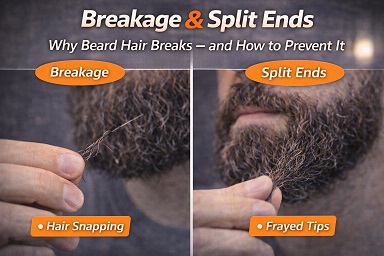
Beard Breakage
- Hair snapping or thinning
- Uneven length
- Weak, brittle texture
Split Ends
- Hair ends separating into two or more strands
- Frayed or fuzzy appearance
- Reduced softness and manageability
Both are signs that beard hair lacks moisture, protection, or flexibility.
Why Beard Hair Is Prone to Damage
Beard hair is different from scalp hair:
- Thicker and more porous
- Naturally drier
- Exposed to constant friction
Because of this, beard hair needs intentional care to remain healthy.
The Most Common Causes of Breakage
Dryness
Dry hair becomes stiff and brittle. Without moisture, beard hair snaps under normal movement.
Fix:
- Apply beard oil daily
- Use beard butter at night if needed
Friction
Friction weakens hair over time.
Common sources:
- Rubbing beard dry with a towel
- Aggressive combing or brushing
- Clothing collars and scarves
- Sleeping on rough pillowcases
Fix:
- Pat beard dry
- Use wide-tooth combs
- Comb gently from the ends up
- Consider smoother pillowcases
Overwashing
Frequent washing strips natural oils, leaving hair dry and fragile.
Fix:
- Rinse daily
- Wash 2–3 times per week
- Always reapply beard oil after washing
Poor Grooming Technique
Forcing tools through knots causes snapping at weak points.
Fix:
- Detangle slowly
- Never comb a dry beard
- Use product before grooming
How to Prevent Split Ends
Moisture Is the First Line of Defense
- Beard oil keeps hair flexible
- Butter helps retain moisture
- Conditioning prevents fraying
Trim With Intention
Trimming doesn’t stop growth — it prevents damage from spreading.
- Trim split ends, not length
- Use sharp tools
- Trim lightly and consistently
Protect the Ends
The ends of your beard are the oldest and driest.
Extra care tips:
- Apply a small amount of butter to ends
- Avoid excessive heat
- Protect from extreme cold or wind
What Doesn’t Fix Breakage
- More product
- Harder brushing
- Cutting everything short
- Washing more often
These often make the problem worse.
How Long Until You See Improvement?
With consistent care:
- Breakage reduces in 2–3 weeks
- Texture improves steadily
- Split ends stop multiplying
Existing splits won’t heal, but they can be managed and prevented from spreading.
When Breakage Persists
If breakage continues despite good care:
- Reevaluate washing frequency
- Reduce friction sources
- Simplify product layering
Breakage is almost always mechanical or moisture-related.
Final Thought
Breakage and split ends are signals, not failures. They tell you your beard needs more protection, not more force.
When beard hair stays moisturized, conditioned, and gently handled, it grows stronger and longer — without thinning or fraying.
A strong beard grows slowly — but it grows intact.