


White flakes in your beard are one of the most frustrating beard problems men face. The mistake most people make is assuming all flakes are the same. They aren’t.
Beard dandruff and dry skin look similar, but they have different causes—and different solutions. Treating the wrong condition often makes the problem worse.
This guide explains how to tell the difference and how to fix each one correctly.
Why Beards Flake in the First Place
Facial skin is thinner and more sensitive than scalp skin. Once you grow a beard, that skin:
- Loses moisture faster
- Produces oil unevenly
- Gets less oxygen and exfoliation
Flakes appear when the skin barrier becomes compromised. The reason it breaks down determines whether you’re dealing with dry skin or beard dandruff.
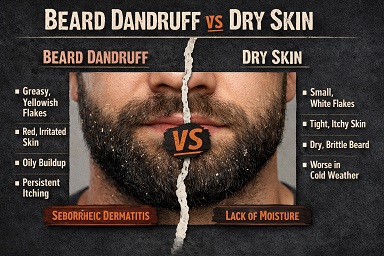
Beard Dandruff vs Dry Skin: The Key Differences
Dry Skin (Most Common)
Cause: Lack of moisture and damaged skin barrier
Signs:
- Small, light flakes
- Tight or itchy feeling
- Flaking worsens in cold or dry weather
- Beard hair feels rough or brittle
Dry skin is a hydration issue—not a hygiene issue.
Beard Dandruff (Seborrheic Dermatitis)
Cause: Overgrowth of yeast combined with excess oil
Signs:
- Larger, yellow or greasy flakes
- Red or irritated skin underneath
- Waxy buildup near the skin
- Flakes persist even with moisturizing
This is a skin condition, not simply dryness.
How to Tell Which One You Have
Use this quick test:
- If flakes improve within 3–5 days of daily beard oil use, it’s dry skin
- If flakes remain greasy, clump together, or cause redness, it’s beard dandruff
Most men experience dry skin, not true dandruff.
How to Treat Dry Beard Skin
Step 1: Stop Overwashing
- Wash beard 2–3 times per week max
- Rinse with water on off days
Overwashing strips natural oils and worsens dryness.
Step 2: Use Beard Oil Daily
Beard oil restores moisture to:
- The skin beneath the beard
- The hair shaft itself
Apply to a slightly damp beard and massage into the skin first.
Step 3: Avoid Harsh Ingredients
Skip products containing:
- Alcohol
- Strong detergents
- Overpowering fragrance
These damage the skin barrier and increase flaking.
How to Treat Beard Dandruff
Step 1: Use a Gentle Medicated Cleanser
Wash 2–3 times per week with a mild antifungal or zinc-based cleanser designed for facial skin.
Avoid harsh dandruff shampoos—they often cause rebound irritation.
Step 2: Rebalance With Beard Oil
Even dandruff-prone skin needs hydration. Lightweight oils help normalize oil production and reduce irritation.
Step 3: Stay Consistent
Beard dandruff improves gradually. Expect visible reduction within 1–2 weeks of consistent care.
Common Mistakes That Make Flaking Worse
- Scrubbing aggressively
- Washing daily with shampoo
- Using scalp products on facial skin
- Applying oil only to the hair, not the skin
- Switching products too frequently
Consistency matters more than intensity.
Preventing Beard Flakes Long-Term
- Maintain a skin-first routine
- Use beard oil daily
- Groom after applying product, not before
- Adjust routine seasonally (winter dryness is real)
- Keep routines simple and repeatable
Flakes return when routines break down.
Final Thoughts
Most beard flaking is caused by dry skin, not dandruff. Treating it correctly requires hydration, restraint, and consistency—not stronger products.
Healthy skin creates a comfortable beard.
Comfort creates consistency.
Consistency solves the problem.
That’s the difference between managing flakes and eliminating them.