
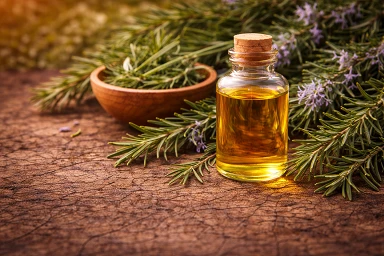
Rosemary has a rich history rooted in the Mediterranean, where it has been used for over 2,000 years in cooking, medicine, and personal care. Ancient Greeks and Romans regarded rosemary as a symbol of strength, remembrance, and clarity. Students wore rosemary wreaths while studying, believing it sharpened the mind and improved focus.
In Roman bathhouses, rosemary was infused into oils and waters for cleansing and revitalization. Throughout the Middle Ages, rosemary became a staple in monastery gardens and apothecaries, commonly used for grooming, hair care, and preservation. It was also burned or worn to ward off illness and purify the air.
By the Renaissance, rosemary oil was widely used in early colognes and hair preparations, earning a lasting reputation as a stimulating, clean, and herbal essential oil. Today, rosemary remains a cornerstone in grooming and hair care for its invigorating aroma and functional benefits.
1. Rosemary Cultivation
Rosemary is a hardy evergreen herb grown in sunny, dry climates with well-drained soil. The leaves contain the highest concentration of aromatic compounds.
2. Harvesting
Fresh rosemary sprigs are harvested just before flowering, when oil content and aroma potency are at their peak.
3. Preparation of Plant Material
The leaves and stems are cleaned and lightly chopped or crushed to increase surface area for efficient oil extraction.
4. Steam Distillation
The prepared plant material is steam-distilled. As steam passes through the rosemary, it releases the volatile aromatic compounds.
5. Condensation & Separation
The steam cools and condenses back into liquid. Rosemary essential oil naturally separates from the distilled water.
6. Filtration & Quality Control
The oil is filtered and evaluated for clarity, aroma sharpness, and consistency before being approved for cosmetic use.
Rosemary oil is rich in naturally occurring compounds such as cineole, camphor, and alpha-pinene, giving it a fresh, herbal, slightly woody aroma.
Key characteristics
In beard care, rosemary oil adds energy and precision. It sharpens fragrance blends, complements evergreen and citrus notes, and delivers a clean, confident finish. Its herbal character brings structure and freshness without overpowering the profile.
From ancient Mediterranean traditions to modern grooming formulations, rosemary oil remains a symbol of clarity, strength, and timeless care—crisp, refined, and enduring.